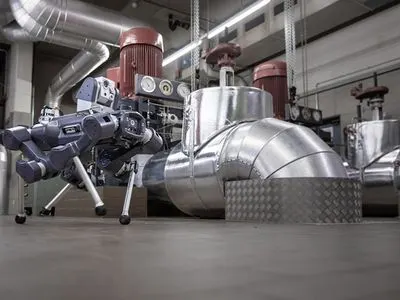
A Swiss quadruped built specifically for autonomous industrial inspection, with a built-in zoom, thermal and acoustic sensor head. An explosion-proof ANYmal X version works in hazardous areas.
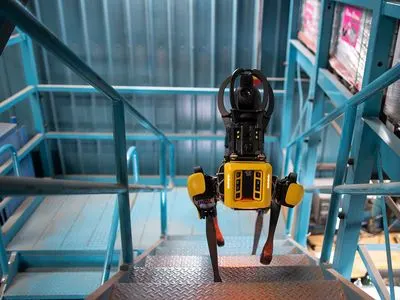
The best-known commercial robot dog, used for autonomous inspection rounds in plants, substations and construction sites and also for security patrols. Sensor payloads and an arm are bought as add-ons.
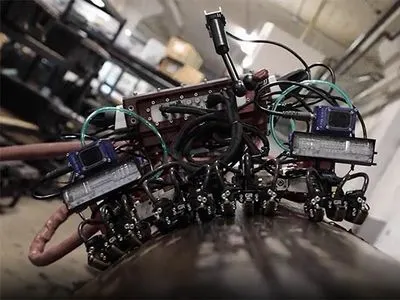
Magnetic wall-climbing robots that scan boilers, tanks and pipes with dense ultrasonic arrays to measure wall thickness. Sold as an inspection service with data on Gecko’s Cantilever platform.
Climb height up to 23 m (TOKA Flex)
Min pipe diameter 6 in (TOKA Flex)
Sensors 12 to 18 ultrasonic probes (TOKA Flex); 24 to 32 (TOKA 4)
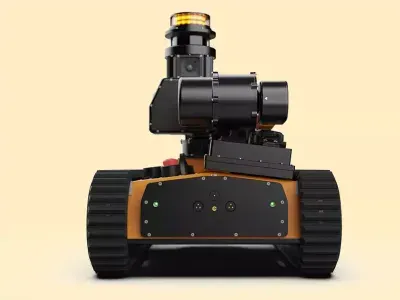
An Austrian tracked robot certified for ATEX Zone 1, built for unattended inspection rounds on offshore platforms and gas plants. Works with fleet software such as Energy Robotics.
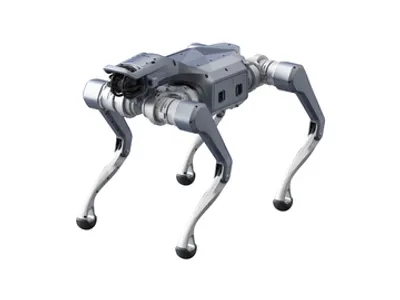
A large, fast industrial quadruped from China that carries heavy sensor loads for inspection and rescue work. Much cheaper than Western rivals with long battery life.
Payload 40 kg walking, 120 kg standing
Top speed over 6 m/s
Runtime 4 to 6 h
$76,900 to $100,000(about £58,604 to £76,208)
Available in the UK
No robots match. Try clearing a filter.
0 selected
Advantages of inspection robots
Goes where people shouldn’t
Inspection robots enter hot, toxic, confined or high places so people don’t have to.
Takes the same readings every time
A robot follows the same route and takes gauges, thermal images and sound readings from the same spots, so changes stand out.
Finds faults early
Thermal, acoustic and gas sensors pick up leaks, hot spots and wear before they cause a shutdown.
Climbs stairs and steps
Legged robots handle stairs, gratings and rough ground that stop wheeled robots.
Benefits for your business
Fewer people in hazardous areas
More frequent inspections at lower cost
Digital records of every reading
Less unplanned downtime
What to watch out for
High purchase prices and specialist set-up
Battery life limits each mission
Needs data and software to turn readings into decisions
Some sites need ATEX-certified models for explosive atmospheres
What inspection robots cost
Of the 5 robots listed here, 2 have a published or reported purchase price, from about £56,775 to about £58,604. The other 3 are price on request: the maker or dealer quotes for each site.
Makers sell robots in three main ways: outright purchase, a lease or finance deal over three to five years, or robots as a service, a monthly fee that usually includes servicing, software, support and sometimes insurance. Ask for the full cost over the life of the robot, including installation, mapping, docking stations, lift or door integration, training, batteries and consumables such as pads, brushes or blades.
Questions
How much does an inspection robot cost?
Legged inspection robots from the best-known makers cost tens of thousands of pounds or more, with sensor payloads extra. Lower-cost quadrupeds exist but have fewer industrial features.
What does a quadruped inspection robot do?
It walks a set route around a plant, reading gauges, taking thermal and acoustic readings and checking for leaks, then sends the data to the control room.
Can inspection robots work in explosive areas?
Only ATEX-certified models. Check the certification on each robot’s page before using one in a hazardous zone.
Do inspection robots need an operator?
They can run missions on their own once a route is set, but most sites keep an operator who can take control remotely.
Where are inspection robots used?
Oil and gas sites, power plants, chemical plants, water works, mines, tunnels, data centres and construction sites.